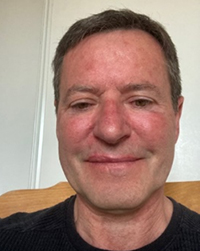
Gary Brown
- Principal Safety Engineer & AI Referent
- Airbus Commercial SAS
Gary is a Chartered Engineer with a Master’s Degree in Safety Critical Engineering with Distinction at the University of York. He has performed the role of Aircraft Safety Director for 5 years on the Airbus own Beluga XL development. In addition, he was the Aircraft Safety Manager for 4 years on the military A400M, and heavily involved in the Certification of the new A321neo derivative the eXtra Long Range (XLR), where an additional; Rear Centre Tank (RCT) is added.
At the moment Gary is engaged on the A350 Ultra Long Range, again with an RCT as well as supporting the A350 addition of a Freighter platform. He covers all Airbus commercial aircraft as the safety approver for all systems at Airbus Filton UK and Getafe Spain.
Gary regularly teaches at Cranfield University on AI, OEM and UERF PRA as well as speaking at events on AI safety with CURe. He is the technical secretary of the SAE G-34 AI committee as well a voting member at the AE-7F Hydrogen and Fuel Cells, WG-117 software and safety WG-63. Gary is also a member of the IDCA (Independent Data Consortium for Aviation).
Presentations outside of Airbus and Cranfield University:
1. Colloque Intelligence Artificielle de L’AAE – DGAC Paris 13th Nov 24 – How to safely integrate an AI ML use function within an aviation CFR/CS25 platform that can be approved
2. RAeS Toulouse branch – 16th Oct 24- A Theoretical Use Case – Object Ground Taxi Detection with CURe
3. Safety Critical Systems Club (SCSC) UK: Certification Use Reliance (CURe) an Aircraft level view – at Developing Safe AI at BCS Copthall Avenue, London 27th June 24
4. IDCA (virtual) 3rd April 24 – End to End Built-in Safety at an ML product system integration
5. AeroTalks Charlotte US – End to End Built-in Safety at an ML product system integration, 14th March 24
6. FAA AI Tech Talks (virtual) Jan 24 – AI safety Assessment approach
7. FAA AI Tech Talks (virtual) 20th Sept 23 – CURe an Aircraft Level view of an AI ML Part 21integration
8. SafeComp23 – CURe – Toulouse Sept 23
Sessions
-
AI and ML in Testing
The role AI/ML and big data play in creating an operations to design/engineering safety loop
AI and ML are emerging in aerospace and avionics, raising complex testing and certification challenges, presenting significant verification and validation challenges. AI use cases are broadly categorized into narrow/specialized AI (e.g., object detection) and generative models, which pose greater unpredictability due to non-deterministic outputs. Current architectures favour non-safety-critical, passive AI/ML systems operating in parallel with primary avionics functions—supporting anomaly detection, predictive maintenance, and decision support. In light of limited data availability, what methods are most appropriate for testing and validating? How do you approach verification and validation of non-deterministic AI systems within the constraints of deterministic safety standards like ED-324/DO-178C? Where will EUROCAE technical standards (WG114) support the development of systems and the certification of aeronautical systems implementing AI-technologies?
-
Panel Discussion: Meeting Certification Standards – Barrier to Entry?
While certification standards safeguard safety and reliability, their rigidity and escalating costs may deter innovation and small-market participation. Inconsistencies across commercial, military, VTOL, and UAV certification frameworks further complicate compliance. Limited data sharing also hinders assurance for advanced cockpit systems, as more tech is introduced to support the pilot. In the wake of the 737 MAX crisis, stricter oversight—such as CS-25 Amendment 28 and EASA’s conservative stance—has intensified regulatory caution. This panel discussion explores whether adopting DER-like delegated authority frameworks or reverting to simpler, lower-complexity technologies could streamline certification, reduce cost and time, and help sustain innovation without compromising safety, or whether regulators are hindering the industry by over protection.