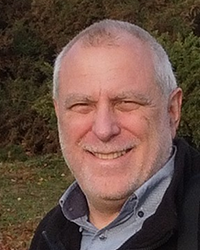
Prof. Paul Febvre
- Professor of Space Systems Engineering
- Cranfield University
Paul Febvre is Professor of Space Systems Engineering & Director of Cranfield University Space Systems Centre
Prior to joining Cranfield University, Paul served as CTO at the Satellite Applications Catapult, responsible for leading the technical strategy and innovation programmes. Paul led several disruptive programmes while at the Catapult, including ground breaking work on synthetic aperture communication satellite systems, OneWeb based positioning and timing services, novel antenna subsystems, 5G trials and future of flight programmes, space energy initiatives. Paul was also responsible for establishing the high performance computing and wireless test infrastructure to support prototyping of new products and applications.
Paul Febvre has four decades of experience in research and development in the field of satellite communications and positioning technologies, with a proven track record of delivering new technology into operational service. This included 19 years as Chief Architect and System Design Authority at Inmarsat, responsible for design and bringing into service satellite communications systems in multiple frequency bands and 12 years at BT research labs in East Anglia.
Sessions
-
Modernizing CNS: Bridging Technology and Stakeholder Needs in Evolving Airspace
Modernizing CNS: Emerging Technology Enablers for Airspace Evolution
The evolution of Communication, Navigation, and Surveillance (CNS) systems is essential for Trajectory Based Operations (TBO) and broad adoption of 4D Trajectories. Modern airspace operations rely on secure, resilient, real time data exchange using ADS B, Mode S, VHF, SATCOM, and scalable digital architectures to support rising traffic and new unmanned systems. At the same time, GNSS jamming and spoofing threaten navigation integrity. This session examines how advanced digital CNS capabilities—multi constellation navigation, interference detection and mitigation, APNT solutions, and robust PNT architectures—integrated with 5G/6G and LEO/GEO satellites can strengthen resilience, ensure safety, and enable future data driven airspace management